|
|
||
|
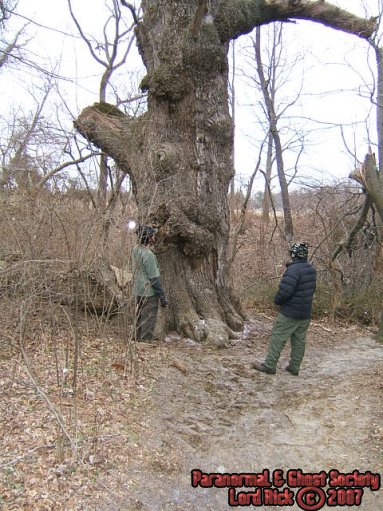
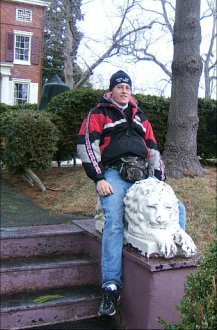
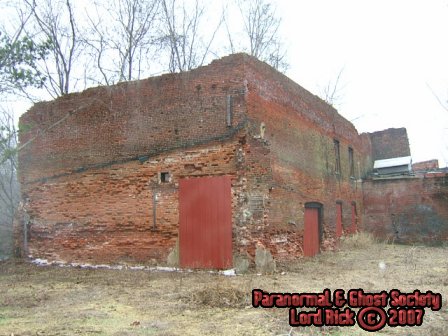
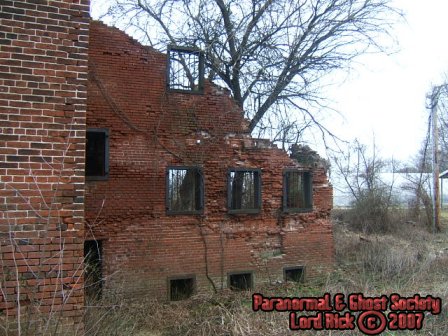
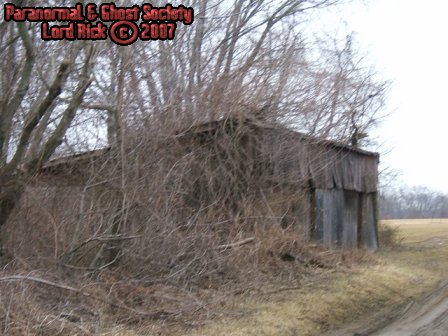
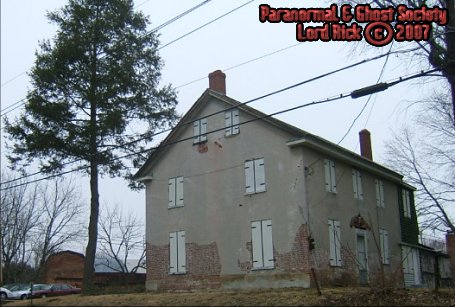
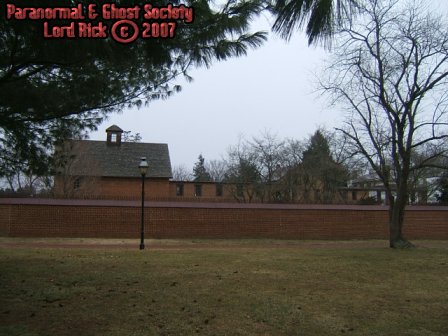
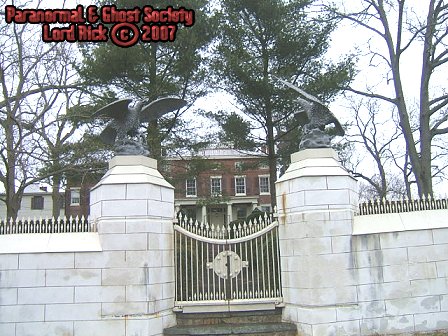
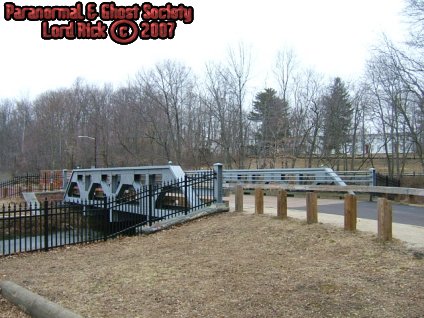
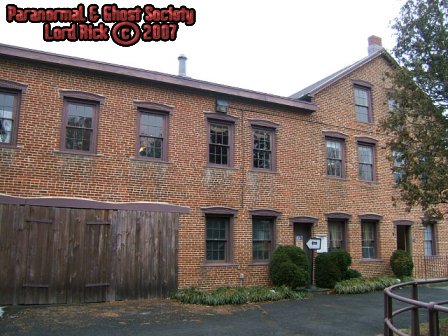
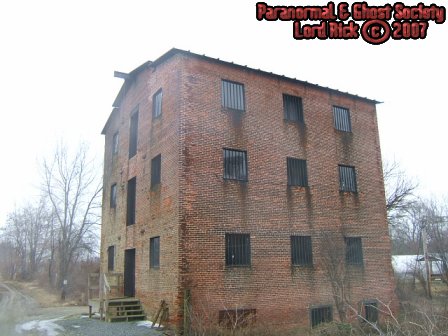
Historic Smithville Village really intrigued me was not sure if there was any ghost stories or Jersey Devil sightings in the area but one thing was for sure that this ghost town was like no other. It was home to H.B. Smith an inventor and entrepreneur he lived in the mansion and had a school house. Gathering from my tour of the town it was obvious this town was all about the law with two separate prisons we came across. Seemed actually the town was rather fortified as many structures had high walls, wrought iron spikes or barred windows. The village has been turned into a public park however it all started from a small mill operation on Rancocas Creek to a major industrial plant which employed hundreds of workers in its shops and yards from the 1860s to the 1920s. The town was known for its high quality woodworking machinery, star wheeled bicycle and the Mt. Holly Bicycle Railroad. The town was ahead of other towns in NJ with its workers rights and welfare. The workers had educational opportunities here along with artistic and recreational activities available at their leisure. It was a very up to date industrial center. The mansion the greatest structure of all had rose garden court yards and grape arbors. The front of the stairs were guarded by two stone lions and even a gardeners cottage. There was also a watch tower near the mansion seen that from afar. The village was about 280 acres which included meadows, upland forest, a 22acre lake, streams and even a ravine which we hiked down into. Surrounding the village is much wild life such as white tailed deer, red fox, beavers, cottontail rabbits, great blue herons, wild turkey, red tailed hawks and much more. I did do a little more research found out that a few Jersey Devil sightings took place one of them was sighted here and on another occasion odd screams were heard near the village. Smithville Village is really on the edge of the Pine Barrens unlike other ghost towns that run deep inside of them. Aside from that if you want a more in depth history the area was inhabited by the settlement of Alumhatta which consisted of native Americans. The lands were rural and the creek in the area could be used to cultivate the area for crops and hardwood forests for the saw mills. The area was very low populated with a few laborers that would run the mill. The Shreve Brothers Jonathan L. and Samuel came to the area in the 1830s they purchased the lands to set up a textile manufacturing factory. They called the town Shreveville and it prospered to over 400 people in the 1850s with over two hundred employed at the factory. The Shreves built a stylish Greek Revival Mansion in the center of town. The town was more like a small city in farm country. In the 1850s or the later part rather a textile depression broke out and the success of the factory declined. The town Shreveville was built around was H.B. Smith's creation. In 1865 Hezekiah and Agnes Smith came to the industrial town of Shreveville and used Smith's patent wood working machinery to start their own production industry. They purchased the town for $20,000 dollars which included 45 acres, village and its buildings. The Smiths upgraded the factories and rebuilt the village housing stock. They create a public park in the center of town, built a dormitory for unmarried factory mechanics, built an opera house for cultural events and constructed the school house for village children north of the mansion. The town was built on production at this point on which included a shorter workday, fresh supply of affordable food at the village farm, recreational events held in the village. The women and children did not have to work at the factories and they were fairly safe with little accidents. The success of the town and this industrial enterprise led to the popularity of Smith and that sent him to the U.S. House Of Representatives in 1878 and in 1882 the NJ Senate. In 1887 he was succumbed to death at the age of 71 where he finished off his years still being a political figure. Below you can read some brochure information the town itself its pretty interesting...enjoy the photos this is a real sweet village! © By Lord Rick
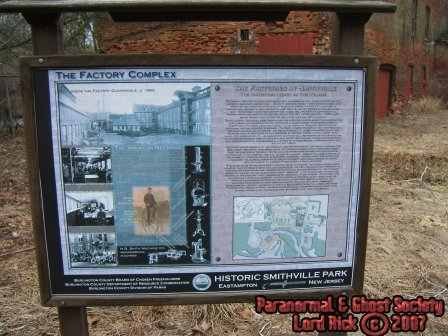
Smithville Brochure Information\ Smithville's Mill Beginnings Dating back to the pre-colonial Native American settlement of Alumhatta, the rural lands which would become Smithville were slow to develop through the 17th and 18th centuries. Early colonists set up saw and grist mills to harness the Rancocas Creek's natural power in cultivating the areas bounty of arable croplands and hardwood forests. Typical of the small mills that lined the banks of the Rancocas, these mills employed a limited group of tradesmen and laborers supporting the owner of the mill. Big changes came to the site in the 1830s. The Shreve Brothers, Jonathan L. and Samuel, purchased the lands to set up a textile manufacturing facility. Shreveville, as it was then known, prospered into the 1850s, growing to a village population over four hundred, with over two hundred employed at the large factory complex south of the residential area. For the Shreves, a stylish Greek Revival mansion was built at the north east corner of the site. With its overscaled factory buildings and almost urban residential neighborhood, Shreveville was practically a small city set in the midst of Burlington County farm country. While the Shreves' success finally dissolved in an 1850s textile depression, the basic town structure they created was built upon by H.B. Smith and is still visible in the buildings and landscape of the park today. H.B. Smith's Model Industrial Village Upon arriving in Burlington County in 1865, Hezekiah and Agnes Smith found in the former industrial town of Shreveville the ideal site for the production of Smith's patent woodworking machinery--a rural site with abundant natural resources; a location near economic giants Philadelphia, New York and Washington; and a bargain price of $20,000 for 45 acres and a village full of buildings. In addition to getting his business off of the ground, Smith spent the next several years upgrading the factories and rebuilding the village housing stock. He also created a public park at the center of the village, built a dormitory for unmarried factory mechanics, built an opera house for cultural and artistic events and constructed a schoolhouse for village children just north of his mansion. All of these improvements were financed out of Smith's pocket. Smithville was to be a model industrial village which combined worker well-being with productivity. This included a shorter workday; a fresh, affordable supply of food at Smithville's village farm; and a wide range of intellectual, artistic and recreational events held in the village throughout the year. Unlike most contemporary factories, women and children were not a significant part of the workforce and records show the factories were unusually safe. The success of Smith's industrial enterprise led to a statewide popularity which sent him to the U.S. House of Representatives in 1878 and the New Jersey Senate in 1882. He remained a major political figure statewide until his death in 1887 at the age of 71. The Smith Mansion Built some 25 years before H.B. Smith's arrival in Burlington County , the Greek Revival mansion symbolizes in its buildings and gardens the complexity of its most famous owner. On the exterior, a six-foot wall surrounded a collection of gardens where H.B. and Agnes could escape from the bustle of the village. Following Agnes' death in 1881, H.B.'s interest in developing the gardens intensified. He began a collection of exotic plants and animals within the garden walls and in a greenhouse that was attached to the gardener's cottage. The interior of the mansion was no less impressive, as Smith continually added rooms and connected nearby buildings to form one large, interconnected structure and included, among other things, a billiard room, bowling alley, poker room, and a bar. As much as the mansion served as Smith's private retreat, it was in almost continual use for Smith's social events and political soirees. Smith was never short of company as the mansion was occupied by a near steady stream of house guests until H.B.'s death in 1887. Well preserved, the mansion is Smithville's most reliable witness to the remarkable life and work of H.B. Smith. The Streetscapes of Smithville In
the acres between the Smith Mansion and the Factory Complex are the
streetscapes of Smithville. Originally created during the 1860s and 1870s,
the Smithville streetscape embodied the vision of H.B. and Agnes Smith in
creating the model industrial village. Unlike the overcrowded, polluted
mill towns and cities that typified America 's industrial age, Smithville
was developed to maximize the sites natural resources for both business
and enjoyment. H.B. Smith not only brought a major industrial complex to
the pastoral landscape of central Burlington County, but in constructing
the industrial village, he worked to establish a strong sense of social
and cultural values which would create the environment for a healthy and
happy workforce. The landscape provided a setting that was both
residential and recreational: worker houses were placed with views of the
public park, the Rancocas Creek and the Smithville Lake beyond. Just south
of Park Avenue was the "village green." With its tree canopy,
open lawn and bandstand this park was the social and cultural heart of the
town, hosting a variety of events, both large and small. To the south of
the park, the Rancocas Creek and the Smithville Lake were used for
swimming, boating and skating during the course of the seasons. As successful a businessman and politician as H.B. Smith was, he was, at heart, an inventor and a mechanic. By building Smithville into a 'model village' he was successful in attracting and keeping a highly skilled workforce to not only build his machinery, but to participate in the continual process of refining existing machines and inventing new ones. Symbolic of the atmosphere that Smith tried to nurture in his company, a trade publication was created to develop the intellectual horizons of the woodworking artisan. Nationally distributed and edited by Agnes, The New Jersey Mechanic contained an array of stories in addition to those on the trade, including travel, philosophy and literature. Smith's strategy paid off. Woodworking machines were constantly improved, and other machines invented, like the steam powered tricycle, steam-powered boat, and an early helicopter. Smith also partnered with other inventors, manufacturing George Pressey's Star high-wheeled bicycle and Arthur Hotchkiss' Smithville-Mt. Holly bicycle railroad. In both cases, Smith Co. mechanics engineered the products well beyond the original designs. It was Smith's woodworking machinery, though, which carried the company (and town) from its beginnings in 1865 to the closing of the machine shop some hundred years later.
|
||
|
|
|